Preparations for Faster AC Charging
Published on March 23, 2015
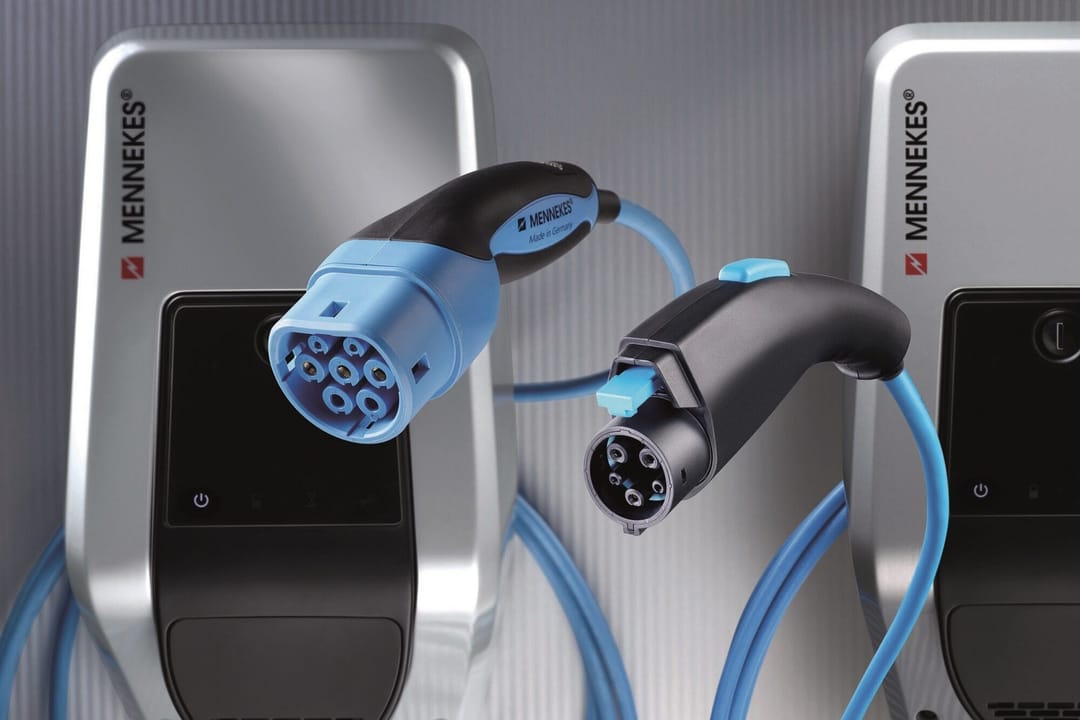
After having spoken to the BMW iAgent when I returned the BMW i3, he told me that the BMW is capable of multiple charging setups. The most basic charging mode is 3680W (230V × 16A), your regular household power outlet. It takes forever that way though. The next step up is doubling to 7360W. Nonetheless, the only real power you can get to quickly charge your car via AC (fast charging is usually throttled above 67%) is by using all three phases of the German power grid. 400V and up to 32A grant us a maximum power of 22170W (√3 × 400V × 32A).
Building a Three-Phase Charging Cable
Safety note: This is 400 V three-phase mains at up to 32 A. Have the socket, fuses and cable installed or checked by a qualified electrician, follow the plug manufacturer's instructions, and leave unsupported vehicle settings alone. You do this at your own risk.
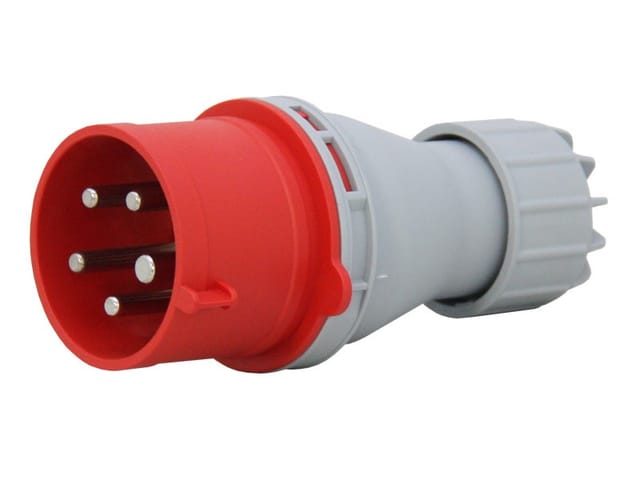
Building a cable is easy. Get yourself a Mennekes Type 2 plug, a CEE 32A plug and a 220 Ohm resistor for the signal. The resistor goes in between CP and PP. This enables the 22kW charging mode for three-phase AC charging.
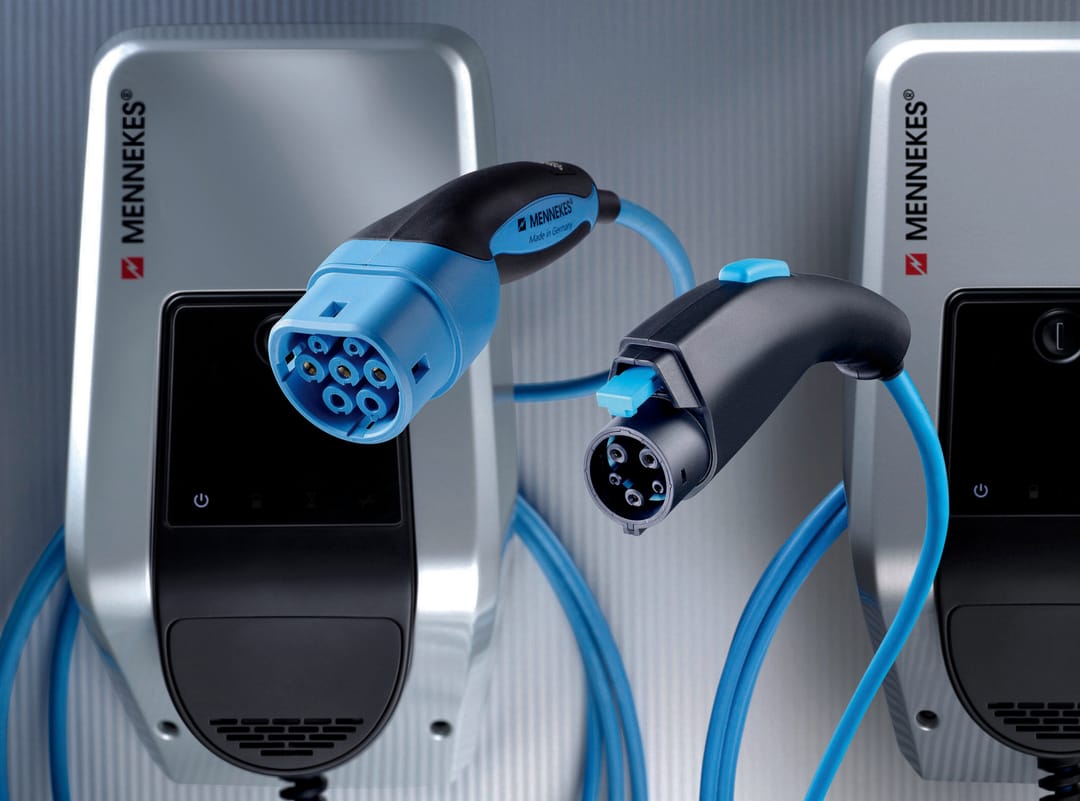
However, the BMW i3 is only fitted with a standard single-phase AC charger (16A/230V). Upgraded for faster charging (AC and DC), you can charge your vehicle with up to 20A/230V on AC single-phase power (4600W) and up to 120A on 400V+ DC power, granting a maximum of 50kW. Unfortunately, the way DC charging works, your power cable needs to already provide the charging voltage (DC). This is not an option for a home-built solution in my opinion, at least not for everyone.
Update from 04/20/2016: I came upon a set of information that states the i3 is actually able to charge with up to 32A/230V single-phase when equipped with the AC fast-charging option. The trick is to enable it via the maintenance menu of the vehicle. BMW does not officially support this charging current though. With the new 2016 model getting a larger battery capacity, it will also receive a three-phase charger system, compared to the current single-phase charger that is included in the i3.
Choosing Plugs, Cable and Resistor
Now, considering that the BMW i3 is capable of charging up to 20A on a single phase, this leaves us with a problem. Regular Schuko plugs are only supposed to be used with 16A, thus we need to use a CEE 32A power plug as well, a Mennekes Type 2 plug for your car and at least a 3-pole cable in between. I'd still recommend doing it with 5 poles (full three-phase power), because you are connecting it anyway. This makes the cable useful for vehicle upgrades. The only change to the above would be using a 680 Ohm resistor to code the signal for 20A. And because 20A is more than 16A, you would have to make sure the outlet and all plugs are rated at 32A, which in turn makes it pretty much necessary to upgrade your fuses to 32A. Just the resistor limits it to 20A, but this could easily be switched later for 32A charging.
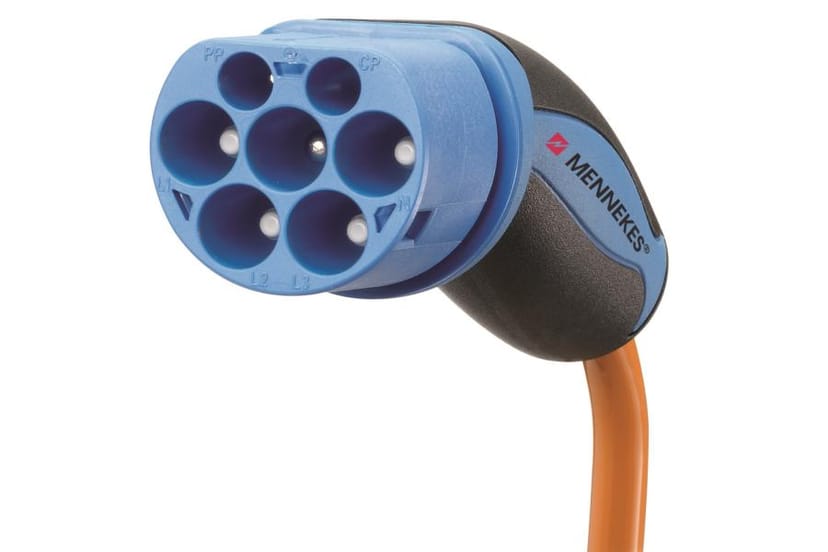
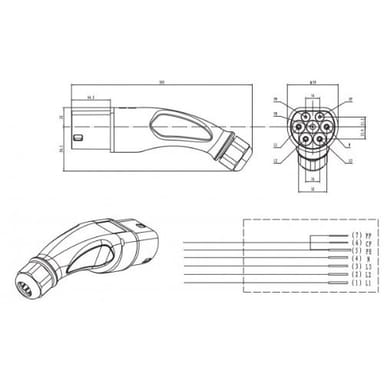
Image credits: Mennekes.